Bonus Layering Tactics: Reshaping Player Strategies in Mobile Table Games and Live Sports Betting
Jakob Russell · Jun 26, 2026

Bonus Layering Tactics: Reshaping Player Strategies in Mobile Table Games and Live Sports Betting
Targeted promotions in mobile table games and live sports markets operate through structured bonus systems that combine multiple incentive layers, and these mechanisms guide how players allocate time and funds across different betting options. Data from industry tracking services shows that such layered approaches appear in various platforms where users encounter deposit matches, free bet credits, and cashback tiers that activate sequentially based on activity levels.
Operators design these layers to encourage specific sequences of actions, starting with an initial deposit bonus that unlocks access to table game variants like blackjack or roulette, then progressing to live sports wagers once certain play thresholds are met. According to figures from the American Gaming Association, mobile engagement in these categories has increased steadily, with layered promotions correlating to higher session durations in tracked markets.
Mechanics of Layered Incentives in Mobile Environments
Layered bonuses function by stacking conditional rewards that players unlock through cumulative behavior rather than isolated actions, and this structure influences decision points at each stage. A typical sequence might begin with a match on the first deposit that applies to table game stakes, followed by a secondary credit for live dealer sessions once the initial amount is wagered, and then a third tier that extends to sports event markets upon meeting volume requirements.
Platform data indicates that users often shift focus between table games and sports betting when these layers align with real-time notifications, creating pathways that extend engagement across both categories. Research from academic studies on digital gambling interfaces has documented how such sequential triggers affect choice architecture, leading participants to explore options they might otherwise bypass.
Effects on Table Game Selections and Patterns
In mobile table games, promotions that layer cashback with multiplier rewards tend to steer players toward variants with higher minimum bets once the base incentive is claimed, and records from operator analytics reveal shifts in game selection frequencies under these conditions. Players frequently progress from low-stakes digital tables to live dealer formats when an additional bonus layer activates after a set number of rounds.
Those who have examined user logs note that the timing of these layered offers coincides with peak decision windows, where individuals weigh risk levels against remaining promotional value. This dynamic appears consistently across multiple device types, though exact outcomes vary by regional market regulations.
Decision Shifts in Live Sports Markets
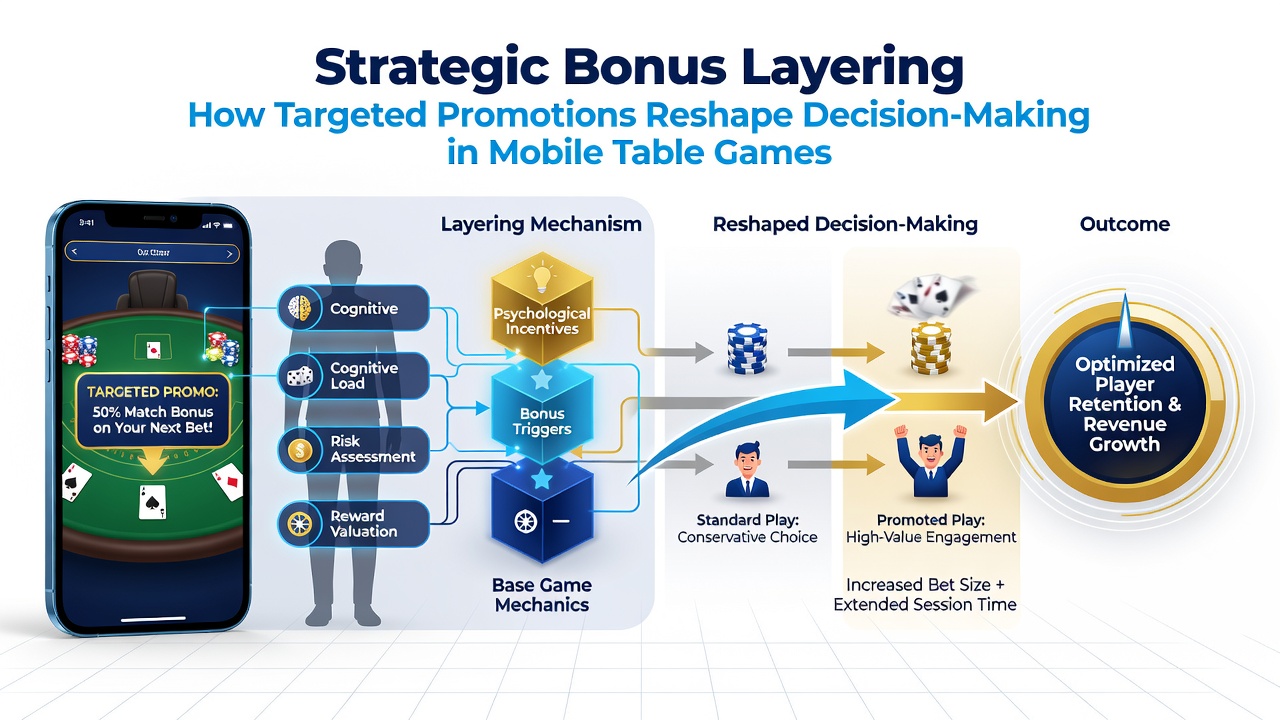
Live sports betting environments integrate bonus layers that respond to in-game events, such as adding a risk-free wager credit after a table game session transitions into an active match, and tracking services report elevated bet volumes during these overlaps. The structure encourages participants to monitor multiple events simultaneously because one layer's completion often feeds into eligibility for the next reward category.
Observers have recorded that users adjust stake sizes and market selections when promotional timers align with live odds fluctuations, producing measurable changes in betting distributions. Reports compiled by the Victorian Commission for Gambling and Liquor Regulation highlight similar patterns in jurisdictions where mobile sports access has expanded, with layered incentives tied to retention metrics through mid-2025.
Patterns Observed Through Mid-2026 Projections
By June 2026, platform developers anticipate further refinement of these layering techniques through integration with user behavior algorithms that predict optimal trigger points for each bonus stage, and preliminary tests indicate potential adjustments in how table game and sports options are presented. Current datasets already show that players exposed to synchronized promotions across categories maintain longer overall activity periods compared to those receiving single-layer offers.
Market analyses suggest these evolutions will continue to emphasize cross-category transitions, where completion of a table game bonus directly influences sports betting entry points. Such developments rest on existing infrastructure rather than speculative elements, with several operators already piloting updated sequences in select regions.
Conclusion
Strategic bonus layering continues to structure player pathways in mobile table games and live sports markets through sequential reward conditions that align with observed activity data. Evidence from multiple tracking sources demonstrates consistent effects on selection timing and category transitions, while regulatory frameworks in various jurisdictions shape how these systems operate. As of June 2026, ongoing adjustments in promotion design reflect accumulated performance metrics rather than isolated innovations, maintaining focus on measurable engagement outcomes across platforms.