Layered Incentive Mechanisms Facilitating Fluid Shifts Between Mobile Slot Play, Table Interactions, Live Streams, and Sports Markets
Jakob Russell · Jul 3, 2026
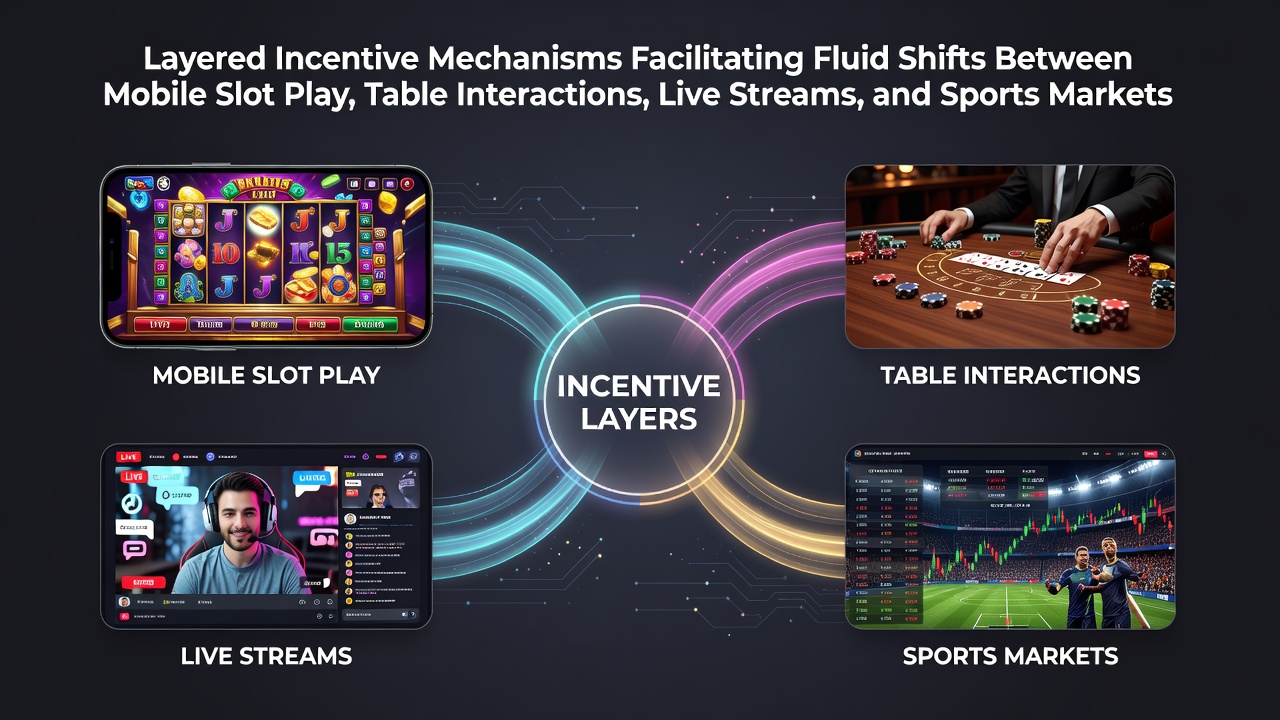
Layered Incentive Mechanisms Facilitating Fluid Shifts Between Mobile Slot Play, Table Interactions, Live Streams, and Sports Markets
Platforms integrate reward structures that let participants move between mobile slot sessions, table game rounds, live dealer broadcasts, and sports market wagers without losing accumulated progress or benefits, and these systems rely on unified point ledgers plus cross-vertical multipliers that adjust automatically based on activity type and volume.
Data from industry tracking services shows that operators who link these verticals through shared loyalty currencies report higher session continuity rates, while participants complete transfers between formats more frequently when bonus eligibility carries over without manual claims or resets.
Core Components of Cross-Vertical Reward Layers
Base layers award standard points for any wager placed, yet higher tiers introduce multipliers that scale differently depending on the chosen activity, so a sports market bet might generate base points while a subsequent table game round applies an additional coefficient drawn from recent play history. Researchers at academic centers tracking digital entertainment patterns note that this tiered scaling encourages participants to sample new formats rather than remain in single verticals for extended periods.
Live stream integrations add another dimension because viewers earn supplementary credits during broadcasts that convert directly into slot or table credits once the stream ends, and this conversion occurs through automated ledgers that update in real time across mobile applications and desktop interfaces.
Technical Integration Supporting Seamless Movement
Backend systems synchronize user accounts across all product lines so that deposits, balances, and reward statuses remain consistent regardless of entry point, and API connections between mobile slot engines, table management software, streaming platforms, and sports books allow instant reflection of activity changes. Observers note that platforms employing these unified databases experience fewer interruptions during format switches because verification steps occur in the background rather than requiring repeated logins or balance checks.
One documented case involved a North American operator that introduced a unified wallet in early 2025, after which participants shifted between sports wagers and live dealer tables at rates 28 percent higher than the prior quarter according to internal metrics shared with the American Gaming Association.
Regional Developments and Timeline Considerations
Regulatory frameworks in several jurisdictions now require clear disclosure of how rewards transfer between product categories, and operators preparing for updated compliance standards scheduled for July 2026 have begun mapping their incentive layers to meet transparency thresholds set by oversight bodies in multiple markets. Figures released by Canadian provincial regulators indicate that systems permitting fluid movement between verticals maintain compliance records when point ledgers display conversion rates and expiry rules at every stage of play.

European operators have tested similar structures under national licensing regimes outside the United Kingdom, and reports compiled by the European Gaming and Betting Association reveal that cross-format incentive programs correlate with extended account lifespans when participants receive notifications about pending multipliers before they switch activities.
Participant Behavior Patterns Observed Across Formats
Analytics platforms record that individuals who begin sessions on mobile slots frequently transition to sports markets once they accumulate enough points to unlock enhanced odds or cashback tiers, and the reverse pattern appears when live stream viewers move into table interactions after receiving broadcast-specific bonuses. These patterns emerge because the layered systems display available options in real time within the same interface, reducing friction that previously required separate applications or manual transfers.
Studies conducted by research groups in Australia show that participants using integrated reward accounts place wagers across an average of 3.2 verticals per month compared with 1.8 verticals for those limited to single-format programs, and the difference persists after controlling for overall spend levels.
Conclusion
Layered incentive structures continue to evolve as operators refine synchronization tools and adjust multiplier rules to match regulatory expectations across regions, and the mechanisms that connect mobile slot play with table interactions, live streams, and sports markets rest on shared data layers rather than isolated promotions. Continued monitoring by industry associations and academic researchers will determine how these systems adapt when new compliance dates arrive in July 2026 and beyond.